AE
9
min read
Account Executive Career Path: How Top AEs Actually Make $300k+ in Tech Sales
Most $300K AE advice comes from people who haven't done it. Here's the AE career path from SMB to enterprise, broken down by two people who have.
Closing million-dollar deals in tech sales is the goal for most ambitious reps, but there is no simple playbook for it. Seven-figure enterprise deals run on internal politics, multiple champions, months of proof and a lot of risk reduction. This post is for mid-level reps and AEs moving upmarket who want to know how these deals actually get sourced, run and closed, from reps who have won them and lost them.

Closing million-dollar deals in tech sales is the goal for most ambitious reps, but there is no simple playbook for it. Seven-figure enterprise deals run on internal politics, multiple champions, months of proof and a lot of risk reduction. This post is for mid-level reps and AEs moving upmarket who want to know how these deals actually get sourced, run and closed, from reps who have won them and lost them.
When you sell to smaller companies, the sales process is fairly predictable: discovery, a custom demo, a trial, procurement and legal, final negotiation and signature, usually over one to four months. Enterprise deals do not work that way. A six to 18 month cycle never runs in a straight line, and every seven-figure deal is shaped by the customer's politics, budget structure and timing.
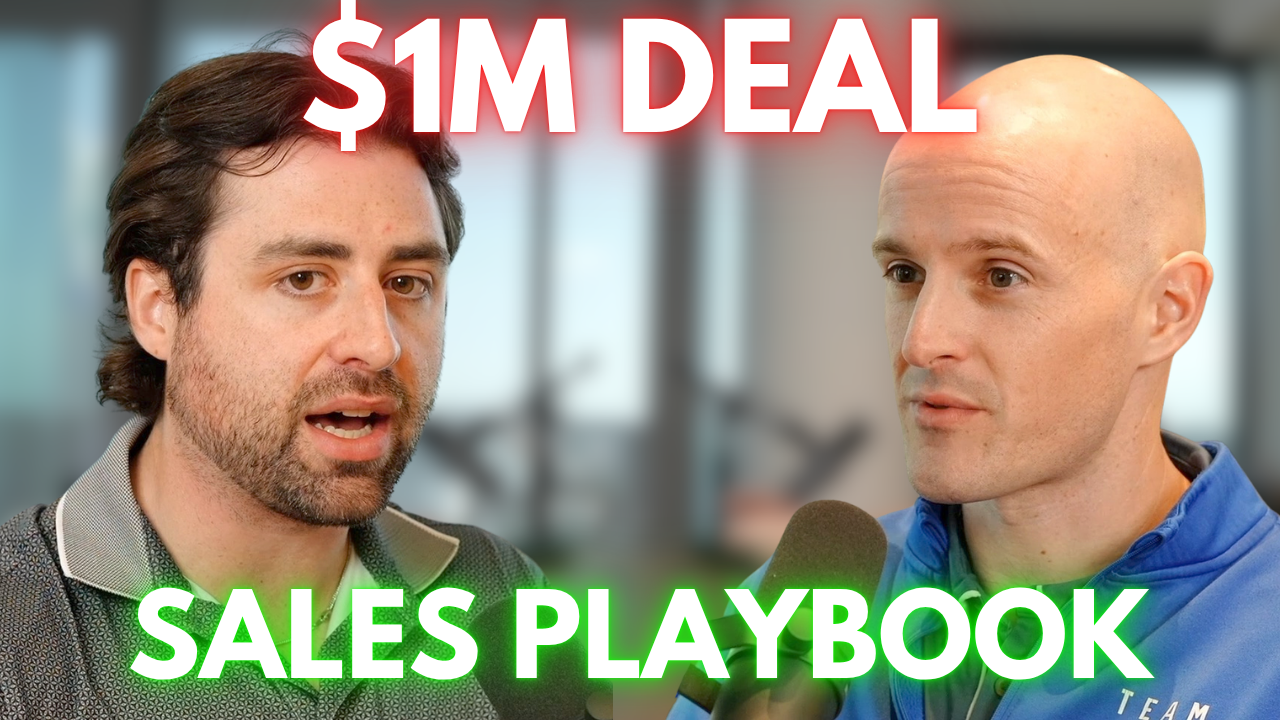
In this video, Eric from Higher Levels interviews Connor, a former Oracle enterprise AE, on how the biggest deals of their careers came together and how some fell apart. The payouts can be life-changing, but so is the pressure. As Connor puts it, every million-dollar deal ends up being different, which is exactly why reps need principles instead of a script.
"Lost a few before I won my first million dollar plus deal."
Most seven-figure deals come from the customer's strategic initiatives and timing, not from a clever cold email. Reps put a lot of pressure on themselves to source these deals alone, but there are really two paths.
Path 1: The RFP. Large companies know where their biggest strategic opportunities and problems are. By the time an RFP (request for proposal) goes out, they have read the Gartner reports, talked to consulting firms and shortlisted vendors. Many have rules requiring them to evaluate at least three vendors, which means sometimes the winner is already picked and you are just along for the ride. Connor has learned after the fact that a decision was predetermined before the RFP was even released, so qualify hard on whether you have a real shot.
Path 2: Bottoms-up and the long game. If you source these deals yourself, expect to stay in front of the account for one to two years. Send value and ask for nothing in return:
When the timing is right, they know who to call. These deals also rarely start at a million dollars. Connor has closed deals he would have been happy to land at $50k to $100k just to win the logo, then the value proved out, the CIO noticed, and the scope expanded across business units into seven figures.
Getting in front of executives directly can work too, and it is worth pursuing in parallel:
Just be realistic about the timeline. Unless the executive comes to you, expect to spend weeks to many months earning a seat in front of the right people.
And no matter when or how you get in front of an executive, you have to bring value. Show up knowing their business, their strategic priorities and a clear point of view on how you can help. In rare cases you can build a genuine personal connection, but almost no executive is willing to spend time on small talk or a generic pitch. If you do not give them a reason to care in that first conversation, you rarely get a second one.
In enterprise deals, you need more than one champion, and you earn them from the very first meeting. A champion is someone who will sell on your behalf internally, has authority or influence over the buying process, and has access to the economic buyer (the person who can sign the check, usually a C-suite executive like the CFO or CIO).
Eric's biggest shock moving from SMB and mid-market into enterprise was how spread out influence is. A great call with a big bank means little on its own. On his best enterprise deals, he spent two to three months running discovery with five to seven distinct teams just to identify who had real influence. Do not attach yourself to any single person.
Most reps ask "How do I get to power?" three months into a deal, when it is already too late. That is putting a band-aid on a wound that needs stitches. Champions introduce you to their peers and executives when they think:
Remember that your champion is taking a personal risk. A million-dollar implementation means extra work on top of their day job and their internal brand on the line. Your ROI case is only half of it. Reducing their personal risk is the other half. The upside for them is real too: leading a major modernization project, whether that is cloud, AI or Kubernetes, is a career win.
Every enterprise deal has detractors. Your job is to make sure your champions have a louder voice with the economic buyer. Some detractors will openly say your solution is worthless on calls. Do not panic. Their resistance usually is not about ROI. It is about what your product does to their role.
Connor's example: imagine you built your company's custom CRM and every rep had to come to you for 10 years. Then leadership announces a move to Salesforce. It might be great for the business, but it is not great for you. The infrastructure engineer who built everything on open source feels the same way about your product.
There is no magic trick to convert a hardcore detractor. What works:
In Connor's experience, the toughest detractor situations were ultimately settled by the CIO or CFO making it clear this was the direction the company was going.
On a seven-figure deal, you stop being a lone closer and become a quarterback. Deals zigzag. You will think you are near the finish line and then a new executive asks what you have been doing for six months, and suddenly you are back in the demo stage.
Running a real process means committing fully once you decide the risk and reward are there:
All of this signals one thing to the customer: if we move forward, this team will make the project a success.
Winning the POV is not winning the deal. Many reps prove out value and then stall. Three months later the customer says they need to push to next year.
Eric's warning from his own big deals: every month a deal drags after the technical win, the odds of closing drop sharply. He would borderline argue by around 25% a month. Once the trial is done, every other piece should already be lined up.
Two things close the gap:
1. Build the business case during the POV, not after. Create a champ deck as you go, with screenshots and results showing where you are beating the success criteria. It arms your champion to present to the buying committee or economic buyer: here is what we accomplished, here is the impact and here is the plan.
2. Reduce risk by running things in parallel. Use a mutual action plan (a shared timeline of steps both sides commit to) baked into your trial doc. Do not wait for security review, then legal, then procurement one at a time. Send your MSA (master services agreement) early so they can start redlining, learn their procurement process, and back into their go-live date.
Two other closing details that matter at this deal size:
Sometimes your million-dollar deal is a line item inside a much bigger contract. Eric often sells through the AWS Marketplace, where a $1.2 million deal can sit inside a $100 million plus commitment the customer is signing with a cloud provider. In that case, the big agreement has to get signed first, and nothing else matters until it does.
On one deal, instead of pushing to meet the CTO, Eric built trust with the cloud provider's rep, who gave a clear reason not to go to the CTO and CEO yet. He still ran a trial and engaged executives at key points, and the deal closed. The bigger the deal, the less one-size-fits-all the motion becomes.
Focus on the process, not the outcome, even though it is brutally hard. When you go all in on a seven-figure deal, work-life balance usually goes out the window. You are pulling solutions engineers and executives off other deals and telling them this is the one. If it falls apart, you can lose internal credibility.
It is also hard not to get happy ears and picture the payout. And the losses hurt. After six months of work, the news usually comes from a third-party implementation partner: they have decided to move forward with another vendor, thanks for your professionalism. It takes time to recover.
Protect yourself with documentation. Eric's advice is to keep a clear record, weekly or at least monthly, of every step you took. If a deal falls through after you and your team spent heavily on on-sites and dinners, you need a clear story of why. And be patient with yourself in a new enterprise role: it can take 12 to 18 months to get your bearings. Year one might land 60% to 70% of OTE, while year two is when top enterprise reps start earning $400k to $500k and beyond.
If you are an AE ready to move upmarket and run enterprise deals with confidence, join our AE Mastery community. You get live calls, deal strategy and frameworks from reps who have closed, and lost, seven-figure deals.
Last updated: November 2026